
Beautiful Plants For Your Interior
$680.00
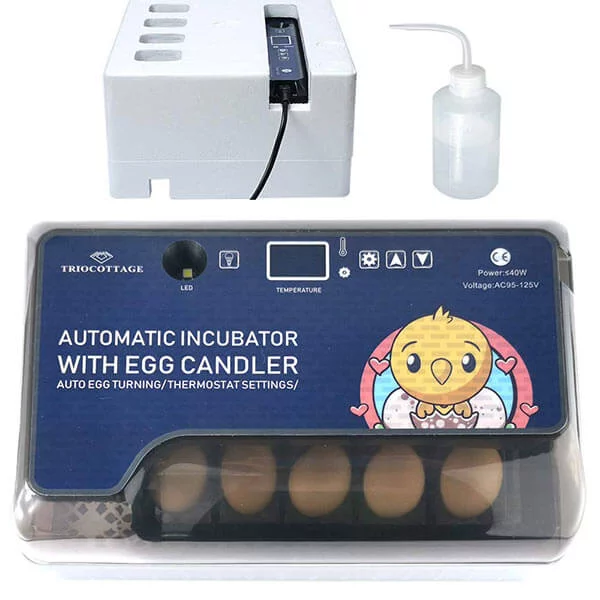
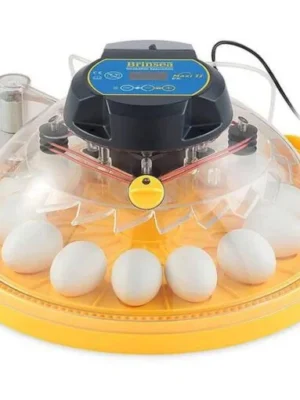
Egg Incubators with Automatic Egg Turning Turner for Hatching Eggs with Egg Candler For Sale
Incubator parameters
Working voltage: AC95~125V / 50Hz
Power: <41W
Dimensions: (L x W x H)32 cm x 21 cm x 12.5 cm
Triocottage incubators design highlights
An egg incubator with automatic egg turning can make the incubation process more consistent and convenient by maintaining controlled environmental conditions while regularly changing the position of developing eggs. For poultry keepers, breeders, and hobbyists, understanding how automatic turning works—and how it fits into the wider incubation process—is essential for achieving reliable results.
https://exoticsbirds.com/product/egg-incubators-w…candler-for-sale/
An automatic egg incubator is a controlled environment designed to provide eggs with the warmth, humidity, ventilation, and movement needed during artificial incubation.
Unlike manual incubation, an automatic egg-turning incubator uses a motorized turning system to periodically change the position of the eggs. This reduces the need for frequent manual handling and helps maintain a consistent incubation routine.
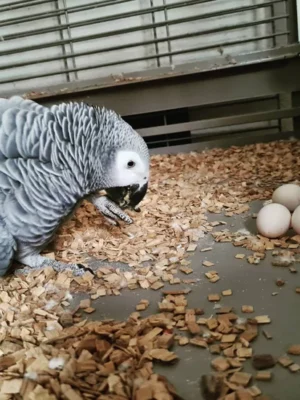
Turning is an important part of natural incubation. A bird naturally moves its eggs regularly, helping prevent the developing embryo from remaining in one position for too long.
An automatic egg turner is designed to reproduce this basic movement mechanically. The exact turning frequency and angle depend on the incubator model and the species being incubated, so users should always follow the manufacturer’s instructions and species-specific guidance.
Most automatic egg incubators use one of several mechanisms:
The objective is gentle, consistent movement rather than rapid or excessive rotation.
Before placing eggs inside an incubator, thoroughly clean the equipment and check that the heating, ventilation, humidity, and automatic turning systems are functioning correctly.
Allow the incubator to stabilize at the manufacturer’s recommended settings before adding eggs. This can help identify temperature or humidity problems before incubation begins.
Eggs should generally be clean, intact, and suitable for incubation. Avoid incubating cracked or damaged eggs.
Temperature is one of the most important factors affecting embryo development. Even relatively small deviations can influence hatchability, particularly when conditions remain outside the recommended range for extended periods.
Humidity is also important because eggs naturally lose moisture during incubation. The appropriate humidity level varies according to species, incubator design, ventilation, and local environmental conditions.
Rather than using one universal setting, follow the incubator manufacturer’s instructions and reliable guidance for the particular bird or poultry species.
Once incubation begins, the embryo undergoes a series of developmental stages. Cell division starts soon after incubation conditions become suitable, followed by the development of major organs and structures.
As development progresses, the embryo increasingly occupies the interior of the egg. The final stage involves positioning for hatching and preparing to break through the shell.
Candling may sometimes be used to monitor development, but it should be performed carefully and according to established incubation practices.
https://exoticsbirds.com/product/egg-incubators-w…candler-for-sale/
Developing embryos require oxygen and produce carbon dioxide. Proper ventilation therefore becomes increasingly important as incubation progresses.
An incubator should never be operated with ventilation openings blocked unless the manufacturer specifically instructs otherwise. Good airflow helps maintain an appropriate gas exchange environment while also contributing to temperature and humidity stability.
Turning should not continue through the entire incubation period. Many species have a final stage before hatching during which eggs should remain stationary.
The correct point to stop automatic turning depends on the species and incubation protocol. Always follow species-specific instructions rather than assuming that the same schedule applies to chicken, duck, quail, parrot, or other bird eggs.
As the embryo reaches maturity, it prepares for hatching. The chick eventually begins breaking through the shell, a process commonly known as pipping.
During this stage, avoid unnecessary opening of the incubator. Rapid changes in humidity can create unfavorable conditions for eggs that are already beginning to hatch.
Newly hatched chicks or birds should be allowed appropriate time to dry and recover according to the requirements of their species.
Several factors can reduce incubation success:
Keeping an incubation log can help identify problems and improve future incubation cycles.
After each incubation cycle, clean and disinfect the incubator according to the manufacturer’s recommendations. Pay particular attention to egg trays, turning mechanisms, ventilation areas, and water reservoirs.
Inspect the automatic egg turner for signs of wear and ensure that moving components operate smoothly before starting another cycle.
Automatic turning can make incubation more consistent and reduce the amount of manual handling required. However, successful incubation depends on many factors beyond turning.
Not necessarily. Different species have different incubation periods and environmental requirements. Check whether the incubator is appropriate for the particular eggs before use.
There is no single turning schedule suitable for every species. Follow the incubator manufacturer’s instructions together with species-specific incubation guidance.
Usually, turning is stopped during the final stage before hatching. The exact timing depends on the species and incubation protocol.
An egg incubator with automatic egg turning combines controlled environmental conditions with mechanical egg movement to simplify artificial incubation. Understanding temperature, humidity, ventilation, turning, egg development, and hatching is essential for responsible and successful incubation.
For the best results, always combine the incubator manufacturer’s instructions with reliable, species-specific incubation guidance. This is particularly important when incubating eggs from less common bird species, where requirements can differ substantially from standard poultry incubation.
Parrots egg incubator with free egg candler, easy to use, only one click
2, The incubators for hatching eggs with automatic turner is completely hands-off however you can also manually press and hold the LED button for 3 seconds to start the turner work once
3, The large-area heating wire plate and the built-in turbo fan make the heat evenly distributed, The mainframe is durable, resistant to wear and tear, and has a long life.
4, Stepped sink keeps the humidity in the egg incubator perfect, can effectively control the humidity, You can also increase or decrease the number of sinks used according to the ambient humidity
5, Tailored PS insulating layer for Incubators can stabilize the temperature for hatching eggs, Power saving and improve hatching rate
Scope of application
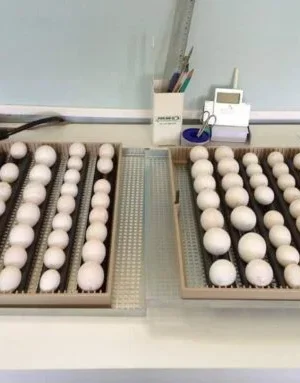
Triocottage small digital incubator fits great The perfect for learning & enjoying the incubation process,in school classrooms, and even science labs.
The auto egg incubator is perfect for a small backyard chicken keeper,the mini model doesn’t take up any space.
The mini incubator is suitable for all birds and poultry eggs, for example, : 3-6 goose’s eggs ; 18-21 pigeon eggs;12-15 chicken egg;24-28 quail eggs,quaker or parrot eggs macaw eggs Silkies, lovebird eggs, guinea eggs,, if you are going to be doing larger eggs such as turkey or smaller eggs such as quail eggs or Jumbo, sized chicken eggs it no problem
After-sales
Within 90 days from the delivery, if there is a malfunction that cannot work, please contact the after-sales mailbox and we will exchange the incubator for free.
If there is any problem within 1 year from the delivery, please contact the after-sales email address and we will mail the accessories of the incubator to you free.
Reviews
There are no reviews yet.