Beautiful Plants For Your Interior
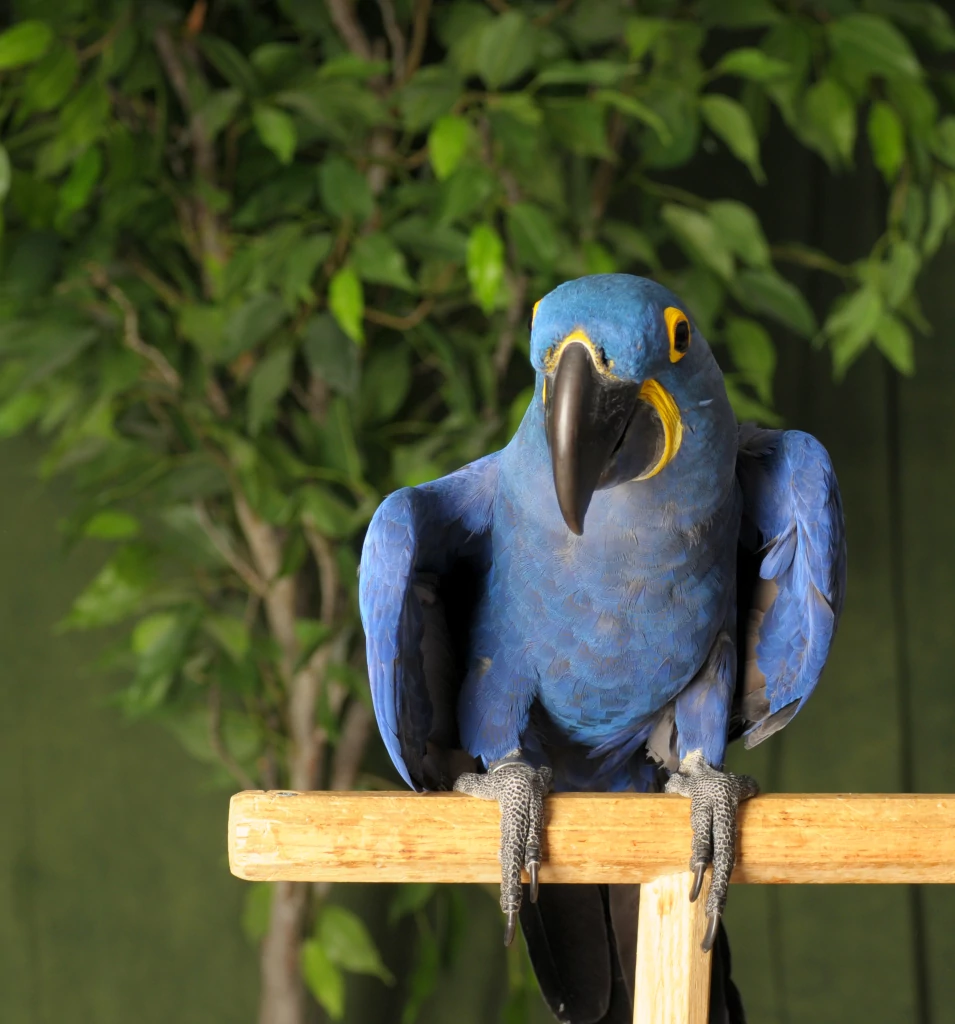
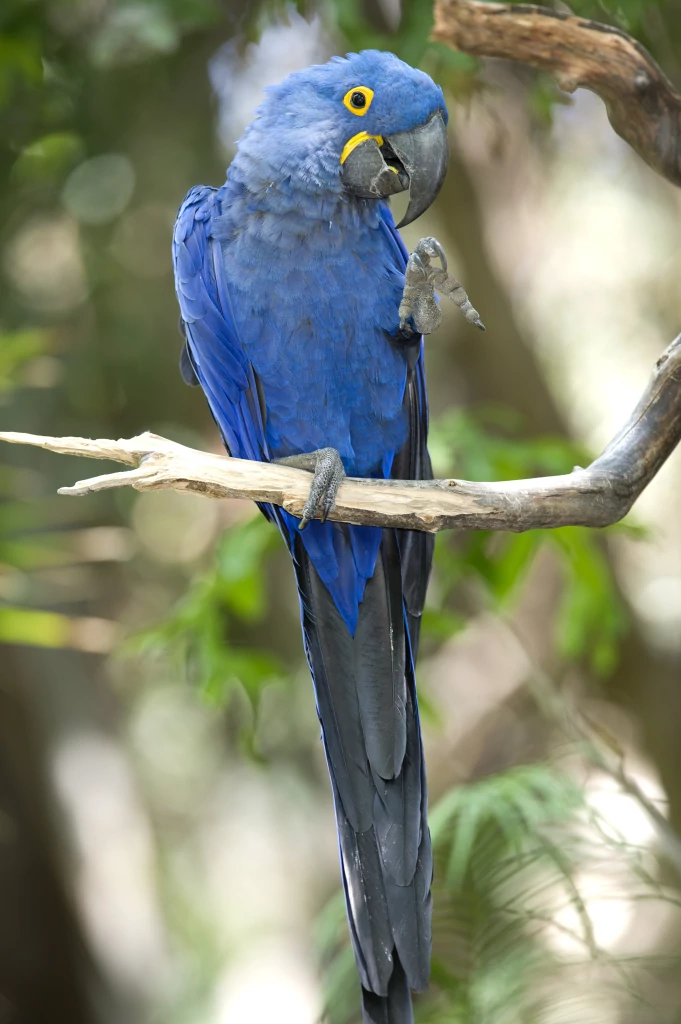
The Hyacinth Macaw (Anodorhynchus hyacinthinus) is one of the most spectacular parrots in the world and the largest flying parrot species. Famous for its brilliant cobalt-blue plumage, striking yellow skin around the eyes and lower bill, powerful beak, and gentle personality, the Hyacinth Macaw is a truly remarkable companion bird.
Native to parts of South America, particularly Brazil, this magnificent macaw is highly valued by experienced parrot keepers because of its intelligence, affectionate nature, impressive size, and long lifespan.
However, owning a Hyacinth Macaw is a serious long-term commitment. These birds require a very large living space, specialized nutrition, daily interaction, extensive enrichment, and access to experienced avian veterinary care.
If you are considering a Hyacinth Macaw as a companion bird, understanding its characteristics and care requirements is essential before making a decision.
| Characteristic | Details |
|---|---|
| Common name | Hyacinth Macaw |
| Scientific name | Anodorhynchus hyacinthinus |
| Family | Psittacidae |
| Origin | South America |
| Main range | Brazil, Bolivia and Paraguay |
| Adult length | Approximately 95–100 cm |
| Weight | Around 1.2–1.7 kg |
| Lifespan | Often several decades with appropriate care |
| Diet | Nuts, seeds, specialized parrot foods, vegetables and suitable fruits |
| Temperament | Affectionate, intelligent, social and generally gentle when properly socialized |
| Conservation status | Vulnerable |
| CITES status | Appendix I |
The Hyacinth Macaw is listed in CITES Appendix I, reflecting the high level of protection given to the species in international trade.
The Hyacinth Macaw is immediately recognizable because of its intense blue plumage.
Its feathers range from deep cobalt to rich blue across the head, body, wings and long tail. The bright yellow skin surrounding the eyes and at the base of the lower bill creates a dramatic contrast with the blue feathers.
Its enormous black bill is one of its most impressive physical features. The bill is powerful enough to break open extremely hard nuts and seeds that would be difficult for many other parrots to handle.
Adult Hyacinth Macaws can reach close to one metre in total length, making them substantially larger than many other commonly kept macaw species.
The Hyacinth Macaw is the largest flying parrot species.
An adult can measure approximately 95–100 cm from the tip of the beak to the end of the tail, while body weight can reach around 1.2–1.7 kg.
This impressive size has practical consequences for prospective owners.
A Hyacinth Macaw needs:
A standard small or medium parrot cage is not appropriate for an adult Hyacinth Macaw.
One of the most appealing characteristics of the Hyacinth Macaw is its personality.
Despite its enormous size and powerful beak, a well-socialized Hyacinth Macaw can be an affectionate, curious and gentle companion. Birds that are raised and handled appropriately often form strong bonds with their human caregivers.
Many owners describe Hyacinths as affectionate, interactive and highly people-oriented.
They may enjoy:
However, every bird has an individual personality. A Hyacinth Macaw should never be treated as a completely predictable pet simply because the species is known for being gentle.
Their size also means that even playful behaviour can accidentally cause injury.
Proper socialization, training and supervision are therefore essential.
Hyacinth Macaws can make exceptional companion birds for experienced owners who understand their needs.
They are intelligent, social and capable of forming strong relationships with people. However, they are not low-maintenance pets.
Before bringing one home, prospective owners should be prepared for:
A Hyacinth Macaw should be considered a long-term companion rather than an impulse purchase.
Nutrition is one of the most important aspects of Hyacinth Macaw care.
In the wild, Hyacinth Macaws are strongly associated with palm fruits and their hard nuts. Their powerful bills are specially adapted for opening these food sources.
A captive diet should be professionally formulated around the nutritional requirements of a large macaw.
Depending on veterinary guidance, a balanced diet can include:
Because nutritional requirements can vary depending on age, activity level and health, an avian veterinarian should be consulted when establishing a long-term feeding program.
Fresh fruit should not become the majority of the diet simply because Hyacinth Macaws naturally consume fruit and palm foods.
The enormous size of this species means that housing requirements are considerably greater than those of smaller parrots.
A Hyacinth Macaw requires a large, heavy-duty enclosure that allows it to move comfortably, climb, stretch its wings and interact with toys.
Rather than focusing only on a minimum cage measurement, owners should prioritize the largest safe enclosure they can realistically provide.
Important considerations include:
The cage should be regarded as the bird’s secure base rather than the only space where it spends its day.
Hyacinth Macaws are active, intelligent birds that require regular physical and mental stimulation.
Daily supervised time outside the enclosure can provide opportunities for:
A common target for large companion parrots is several hours of supervised out-of-cage interaction each day, although the exact routine should be adapted to the individual bird and its environment.
A safe bird room, aviary or appropriately prepared household area can greatly improve a Hyacinth Macaw’s quality of life.
Hyacinth Macaws are highly intelligent parrots.
They can learn routines, recognize people, manipulate objects and participate in positive-reinforcement training.
Training can help with:
Positive reinforcement is generally preferable to punishment.
Short, consistent training sessions can also provide valuable mental stimulation.
Hyacinth Macaws are capable of learning human words and sounds, but they are not generally considered among the strongest talking parrots.
Some individuals develop a useful vocabulary, while others use relatively little human speech.
Their natural communication is much broader and includes:
Potential owners should therefore choose a Hyacinth Macaw for its overall personality and companionship rather than expecting it to become a highly verbal talking bird.
Yes.
Like other large macaws, Hyacinth Macaws can produce powerful vocalizations.
Their calls can travel considerable distances, which is an important consideration for anyone living in an apartment, townhouse or closely packed residential area.
Before acquiring a Hyacinth Macaw, consider whether your home environment can accommodate the natural noise level of a large macaw.
A Hyacinth Macaw can represent a commitment lasting for several decades.
With appropriate nutrition, veterinary care, exercise, enrichment and a safe environment, these parrots can live for many years.
Because their potential lifespan can extend across major stages of an owner’s life, responsible ownership requires long-term planning.
Future considerations should include:
Planning for the bird’s entire lifetime is an important part of responsible Hyacinth Macaw ownership.
Large parrots require access to qualified avian veterinary care.
Routine examinations can help identify potential health problems before they become serious.
Owners should monitor:
Any significant change in eating, activity, breathing, droppings or behaviour should be discussed with an avian veterinarian.
Preventive veterinary care is particularly important for a long-lived bird such as the Hyacinth Macaw.
The Hyacinth Macaw is currently classified as Vulnerable and is protected under CITES Appendix I. CITES documentation identifies habitat loss and fragmentation and illegal capture for the pet trade among important threats.
The species occurs across parts of Brazil, Bolivia and Paraguay, with important populations associated with different habitats including the Brazilian Pantanal.
Conservation work has helped some populations recover, particularly in parts of the Brazilian Pantanal, but habitat protection and prevention of illegal capture remain important.
Because the species is CITES Appendix I, international commercial trade is subject to strict controls. The CITES species index confirms Anodorhynchus hyacinthinus as an Appendix I species.
Anyone searching for a Hyacinth Macaw for sale should pay close attention to documentation and the origin of the bird.
A responsible buyer should ask for appropriate documentation demonstrating the bird’s legal origin and should understand the wildlife-trade requirements that apply in the country of residence.
Important questions include:
Buyers should be especially cautious of sellers who cannot clearly explain the legal origin of a Hyacinth Macaw.
Because CITES rules can differ according to the countries involved and the purpose of the transaction, buyers should verify the requirements with the relevant national wildlife or CITES authority before completing an international purchase.
The Hyacinth Macaw price can be significantly higher than that of many other companion parrots.
Several factors can influence the cost, including:
However, the purchase price is only one part of the total cost of ownership.
A prospective owner should also budget for:
The financial commitment should be evaluated over the bird’s entire lifetime rather than only at the time of purchase.
The high price of a Hyacinth Macaw is influenced by several factors.
They are a protected species, captive breeding can be challenging, and legally documented birds require careful record keeping and compliance with applicable wildlife regulations.
CITES Appendix I status also means international commercial trade is subject to strict controls.
In addition, keeping a Hyacinth Macaw requires considerably more resources than keeping a smaller parrot.
The cost therefore reflects not simply the bird itself, but also breeding, legal compliance, specialized care and the resources required to maintain a healthy adult bird.
Hyacinth Macaws are often compared with other large macaws such as Scarlet, Blue-and-Gold and Green-winged Macaws.
The main differences include:
| Feature | Hyacinth Macaw |
|---|---|
| Size | Extremely large |
| Plumage | Predominantly cobalt blue |
| Personality | Social, affectionate and intelligent |
| Noise | Loud |
| Diet | Requires careful nutritional planning |
| Space | Very large enclosure recommended |
| Lifespan | Several decades |
| Conservation | Vulnerable |
| CITES | Appendix I |
While Hyacinths can be gentle, their physical size means that owners need a different level of preparation compared with owners of smaller parrots.
A Hyacinth Macaw may be suitable for an experienced bird keeper who can provide the space, time, financial resources, social interaction and specialist care the species requires.
Before purchasing one, ask yourself:
If the answer to these questions is uncertain, additional research and consultation with an experienced avian professional should come before acquiring the bird.
The Hyacinth Macaw is a large South American parrot scientifically known as Anodorhynchus hyacinthinus. It is famous for its cobalt-blue plumage, yellow facial markings and exceptionally large size.
Adult Hyacinth Macaws can reach approximately 95–100 cm in total length and can weigh around 1.2–1.7 kg.
Hyacinth Macaws can live for several decades when provided with appropriate nutrition, veterinary care, exercise and a safe environment.
Well-socialized Hyacinth Macaws can be affectionate, social and gentle with their caregivers. However, individual personalities vary and their enormous size means that appropriate training and supervision are essential.
Some Hyacinth Macaws learn human words, but talking ability varies considerably between individuals. They are better known for their intelligence, personality and powerful natural vocalizations than for extensive speech.
Their diet requires careful nutritional planning and can include high-quality formulated macaw food, appropriate nuts, vegetables and limited suitable fruits. Their natural diet includes hard palm nuts and other palm fruits.
The species is currently classified as Vulnerable by the IUCN assessment cited in current CITES documentation, and it is listed in CITES Appendix I. Habitat loss, fragmentation and illegal capture remain important conservation concerns.
Their high cost is influenced by captive-breeding requirements, limited availability, specialized care and strict wildlife-trade regulations. CITES Appendix I status also means international trade is subject to stringent controls.
Captive-bred Hyacinth Macaws can be kept as companion birds where permitted by local law. However, they require extensive space, daily interaction, specialized nutrition and long-term care.
Yes. Their enormous size and powerful beak require a very large, strong and secure enclosure. The larger the safe living environment, the better, provided it is appropriately designed for a large macaw.
The Hyacinth Macaw is an extraordinary parrot combining spectacular appearance, intelligence, social behaviour and impressive physical size.
Its beautiful blue plumage makes it one of the world’s most recognizable parrots, while its affectionate personality has made it highly desirable among experienced parrot enthusiasts.
At the same time, this is not a species to acquire casually. A Hyacinth Macaw requires considerable space, specialized nutrition, daily enrichment, veterinary care and a commitment that can last for decades.
For anyone considering a Hyacinth Macaw for sale, responsible ownership begins with understanding the bird’s needs and verifying its legal, documented origin. When properly cared for and acquired through responsible channels, a captive-bred Hyacinth Macaw can become a remarkable long-term companion.