Beautiful Plants For Your Interior
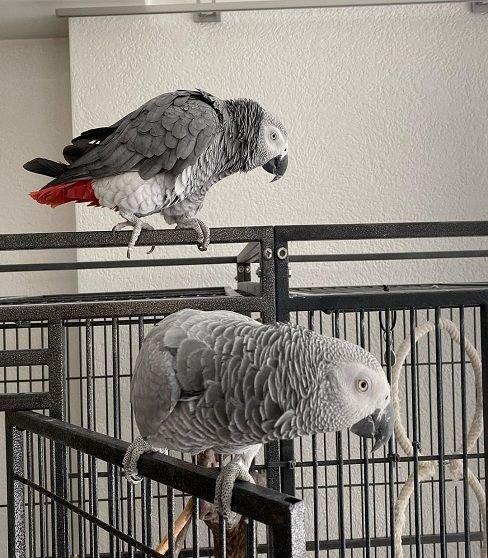
The African Grey Parrot is widely regarded as one of the most intelligent companion birds in aviculture. Known for remarkable problem-solving abilities, sophisticated communication and strong social bonds, the African Grey can be an extraordinary companion for the right owner.
However, this intelligence comes with significant responsibilities.
An African Grey requires much more than a cage, food and occasional interaction. These highly intelligent parrots need mental stimulation, social engagement, predictable routines, appropriate nutrition, exercise and attentive long-term care.
This complete guide explains the differences between the Congo and Timneh African Grey, their intelligence, housing requirements, diet, behaviour, lifespan, CITES considerations and what prospective owners in the United States should know before bringing one home.
| Feature | Congo African Grey | Timneh African Grey |
|---|---|---|
| Scientific name | Psittacus erithacus | Psittacus timneh |
| Approx. length | Around 33 cm | Around 28–33 cm |
| Typical weight | Approximately 400–650 g | Approximately 275–400 g |
| Main colour | Light grey | Darker charcoal-grey |
| Tail colour | Bright red | Dark maroon |
| Intelligence | Extremely high | Extremely high |
| Talking ability | Excellent | Excellent |
| Temperament | Intelligent, sensitive, social | Often described as adaptable and slightly more relaxed |
| Lifespan | Several decades | Several decades |
| CITES status | Appendix I | Appendix I |
Individual size, temperament and lifespan can vary. Current legal and CITES requirements should always be verified for the specific bird and transaction.
The African Grey Parrot is a medium-sized African parrot famous for its intelligence, communication abilities and distinctive grey plumage.
Two species are commonly encountered in aviculture:
Both are highly intelligent and can develop strong relationships with their human caregivers.
Their intelligence makes them fascinating companion birds, but it also means they can become bored or stressed when their environment does not provide enough stimulation.
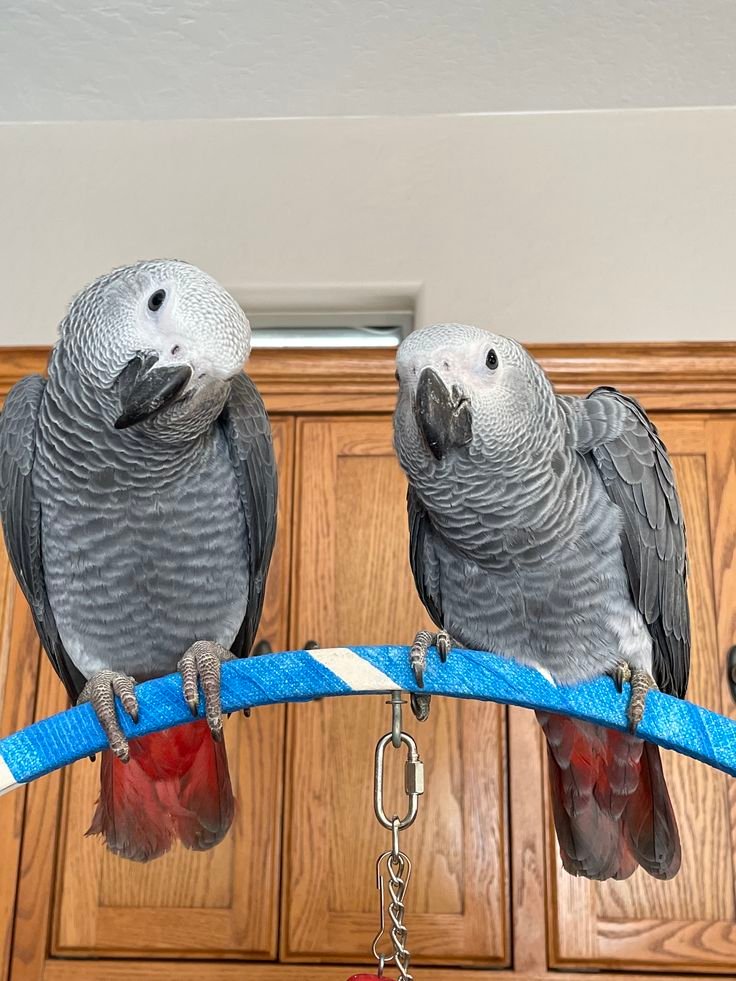
The Congo and Timneh African Grey are closely related but have noticeable physical differences.
The Congo African Grey is generally the larger of the two.
Typical characteristics include:
Congo African Greys are particularly well known for their ability to learn and reproduce sounds and words.
The Timneh African Grey is generally smaller and has darker colouring.
Typical characteristics include:
Individual personality is more important than assuming that every Congo or every Timneh will behave in exactly the same way.
There is no universal answer.
Timneh African Greys are sometimes described by experienced keepers as somewhat more adaptable to changes in routine, while Congo African Greys are often selected for their larger size and impressive communication abilities.
However, personality, socialisation, early experiences and individual temperament can have a major influence on behaviour.
Prospective owners should therefore focus on the individual bird rather than choosing solely on the basis of subspecies.
The intelligence of the African Grey Parrot is one of its defining characteristics.
Research involving African Greys has demonstrated sophisticated abilities involving:
The work of researcher Dr. Irene Pepperberg and the famous African Grey Alex helped bring international attention to the cognitive abilities of these parrots.
Alex’s research demonstrated abilities extending beyond simple imitation, including responses involving quantities, colours, shapes and categories.
This research is one reason African Greys are frequently regarded as exceptional among companion birds.
A highly intelligent bird requires an environment that provides meaningful mental stimulation.
Simply placing several toys inside a cage may not be enough.
An African Grey can benefit from:
The goal is to encourage the bird to think, explore and interact with its environment.
African Greys are intelligent, observant and often sensitive birds.
They can form strong bonds with their owners and may become deeply attached to familiar people.
Some individuals may be:
Not every African Grey will have the same personality.
Some birds enjoy extensive physical affection, while others prefer interacting through talking, training and play.
Respecting the individual bird’s boundaries is an important part of responsible ownership.
African Greys are famous for their ability to imitate human speech and environmental sounds.
Some individuals can develop extensive vocabularies and use learned sounds in appropriate contexts.
However, owners should not purchase an African Grey solely because they want a talking bird.
Talking ability varies between individuals.
A bird may instead prefer:
Communication should be viewed as part of the bird’s natural intelligence rather than simply entertainment for the owner.
Housing is an important part of African Grey care.
A commonly cited minimum starting point for a single African Grey is approximately:
90 × 60 × 120 cm
However, larger is generally preferable when space allows.
The cage should provide enough room for:
The cage should never be considered the bird’s entire living environment.
Daily supervised out-of-cage activity is important for a healthy lifestyle.
African Greys are highly social.
The cage is often best positioned in an area where the bird can observe and participate in normal household activity.
However, avoid placing the cage:
Kitchen fumes can be particularly dangerous to birds.
A social household area can allow the bird to feel included without exposing it to unnecessary hazards.
African Greys often benefit from predictable routines.
A consistent schedule can include:
Sudden changes are not necessarily harmful in every case, but many African Greys appreciate predictability and can become stressed by major disruptions.
A balanced diet is fundamental to long-term African Grey health.
A suitable diet may include:
The exact diet should be adjusted according to the individual bird’s health, age and veterinary recommendations.
Owners should be particularly careful to prevent access to foods and substances that are toxic or dangerous to parrots.
These can include:
Always verify the safety of unfamiliar foods before offering them to your African Grey.
Physical activity is just as important as mental stimulation.
Daily exercise can include:
The room should be bird-proofed before allowing an African Grey to fly freely.
Potential hazards include:
Supervision is essential.
Mental enrichment should be a daily part of African Grey care.
Useful enrichment options include:
Encourage the bird to work for small food rewards.
Give the bird simple problems to solve.
Provide safe materials for natural chewing and shredding behaviour.
Short training sessions can combine mental stimulation with relationship building.
Rotating toys can help maintain novelty and prevent the environment from becoming predictable.
Training is an excellent way to stimulate an African Grey mentally.
Useful behaviours include:
Positive reinforcement is generally the preferred approach.
Punishment can damage trust and may create additional behavioural problems.
Feather plucking and other feather-destructive behaviours can occur in African Greys.
Potential contributing factors may include:
Feather damage should never automatically be assumed to be a behavioural problem.
If an African Grey begins damaging its feathers, an avian veterinarian should be consulted to investigate possible medical and environmental causes.
African Greys are generally quieter than some of the largest macaws, but they are still capable of producing surprisingly loud sounds.
Their vocalisations can include:
Noise levels vary significantly between individuals.
Owners living in apartments or shared housing should consider how vocalisations could affect neighbours.
An African Grey can be a decades-long commitment.
With appropriate nutrition, veterinary care, housing, exercise and enrichment, these birds may live for many years.
Potential owners should therefore think about the bird’s future over several decades.
Ask yourself:
Responsible ownership includes planning for these possibilities before purchasing the bird.
Owners in the United States should establish a relationship with an avian veterinarian.
Routine examinations can help detect potential problems before they become severe.
Watch for changes such as:
Birds can sometimes hide signs of illness, making regular observation particularly important.
African Greys are protected under CITES, and the Congo African Grey (Psittacus erithacus) is listed in CITES Appendix I.
The Timneh African Grey (Psittacus timneh) is also subject to international CITES controls.
For owners in the United States, requirements can involve federal wildlife regulations, documentation and restrictions concerning international movement or commercial activities.
The exact requirements can depend on the species, origin of the bird and intended transaction.
Before purchasing, importing, exporting or transporting an African Grey internationally, verify the current requirements with the relevant U.S. authorities, including the U.S. Fish & Wildlife Service.
Buying responsibly is one of the most important decisions a prospective owner can make.
Ask the seller or breeder about:
Avoid making a decision based solely on colour, talking ability or price.
The bird’s health, history and suitability for your household are far more important.
The purchase price of an African Grey can vary significantly depending on:
However, the initial purchase price is only one part of the overall cost.
Owners should also budget for:
A responsible owner should plan for these ongoing expenses before purchasing.
An African Grey needs mental stimulation, not simply physical housing.
Toys should be varied and rotated regularly.
Some birds talk extensively while others are quieter.
Sudden behavioural changes can sometimes indicate stress or illness.
African Greys generally benefit from meaningful social interaction.
Ownership should be planned around the bird’s entire potential lifespan.
An African Grey may be a rewarding companion for an owner who can provide:
They may be challenging for households that want a low-maintenance or highly independent pet.
The intelligence that makes an African Grey so fascinating also creates a responsibility to provide a rich and engaging life.
African Greys can be excellent companion birds for owners who understand their complex social, mental and physical needs.
Yes. Research has documented sophisticated cognitive abilities in African Greys involving communication, categorisation, memory and problem-solving.
Yes. Many African Greys become skilled vocal mimics and some develop substantial vocabularies, although individual ability varies.
Neither is universally better. Both can make excellent companions, and individual personality, socialisation and care are important factors.
They can be. Although often less powerful vocally than large macaws, African Greys can still produce loud calls and imitate household sounds.
African Greys can live for several decades with appropriate care, making them a major long-term commitment.
Yes. Social interaction and mental stimulation are important parts of responsible African Grey care.
A commonly cited starting point is around 90 × 60 × 120 cm, although larger housing is preferable whenever possible.
They can sometimes adapt to apartment environments, but prospective owners should consider vocalisation, flight space, enrichment and neighbour considerations.
The African Grey Parrot is an extraordinary companion bird.
Its intelligence, communication skills, memory and personality make it one of the most fascinating parrots available to experienced owners.
But these same characteristics create significant responsibilities.
An African Grey needs more than food and a cage. It needs social interaction, mental challenges, physical exercise, appropriate nutrition, veterinary care and a stable environment.
For prospective owners in the USA, researching the species, understanding applicable CITES and wildlife requirements, finding an experienced avian veterinarian and planning for decades of ownership are essential steps before bringing an African Grey home.
With the right environment and responsible care, an African Grey can become a remarkable lifelong companion.