Beautiful Plants For Your Interior
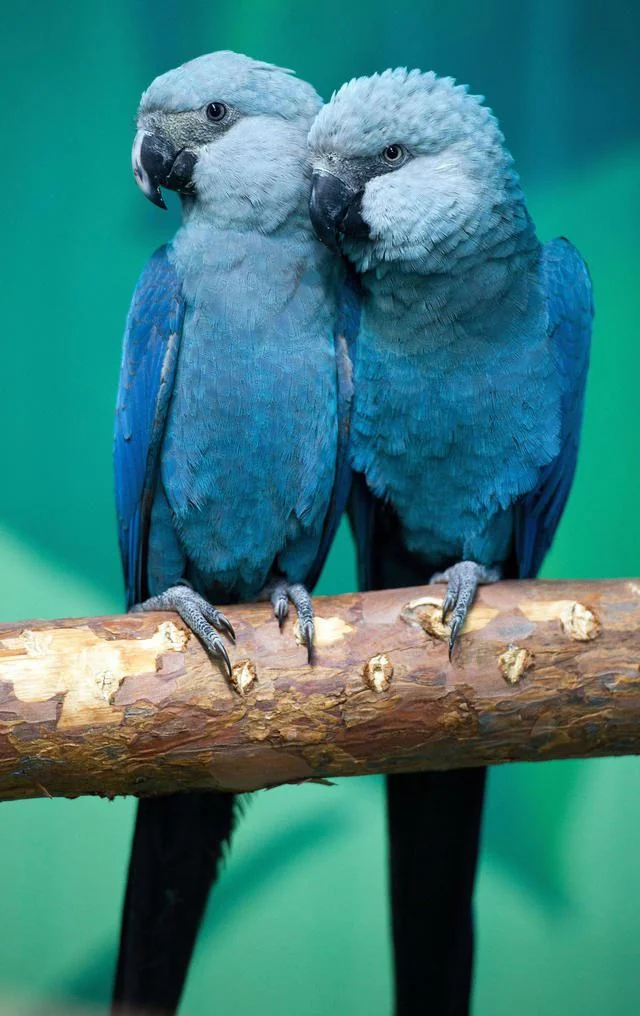
The Spix’s Macaw, scientifically known as Cyanopsitta spixii and sometimes called the Little Blue Macaw, is one of the world’s most remarkable parrots.
With its distinctive blue plumage, remarkable intelligence, and extraordinary conservation history, the Spix’s Macaw has become a powerful symbol of both the threats facing endangered wildlife and the hope created by dedicated conservation efforts.
Unlike many more commonly kept macaws, the Spix’s Macaw is not an ordinary companion bird. Its extremely restricted status, conservation requirements, and international legal protections make it a species that requires exceptional care and specialist knowledge.
If you are researching Spix’s Macaw, this guide explains its appearance, behavior, habitat, diet, care requirements, conservation status, and the important legal considerations surrounding this extraordinary species.
The Spix’s Macaw is a small-to-medium-sized blue macaw native to Brazil.
It became particularly famous because of its dramatic decline in the wild. Habitat destruction, historical trapping, and other pressures caused the wild population to collapse.
The species was considered extinct in the wild for many years before conservation efforts eventually resulted in the reintroduction of captive-bred birds.
Today, the Spix’s Macaw remains one of the world’s most endangered parrots.
Its relatively compact size compared with some larger macaws makes it visually distinctive, but its conservation significance is what truly sets this species apart.
The Spix’s Macaw is recognized by its beautiful blue plumage.
Its body is predominantly blue, with variations in tone across the head, wings, and body.
The species also has a characteristic dark facial area around the beak and eyes.
Its appearance is somewhat different from the brighter blue-and-yellow combination found in the Blue-and-Gold Macaw.
The Spix’s Macaw’s subtle blue coloration is one of the reasons it has become such an iconic species among parrot enthusiasts and conservationists.
Spix’s Macaws are highly intelligent parrots with complex social behavior.
Like other macaws, they require opportunities for mental stimulation, physical activity, social interaction, and exploration.
Potential behaviors include:
Individual personalities can vary considerably.
It is therefore important not to assume that every Spix’s Macaw will have exactly the same temperament.
Spix’s Macaws can develop strong social relationships, but they should not be treated as predictable or automatically affectionate pets.
A bird’s behavior depends on:
A responsible approach is to allow the bird to develop trust gradually rather than forcing physical interaction.
A Spix’s Macaw requires secure, spacious housing that allows appropriate movement, climbing, exercise, and enrichment.
For a bird of this intelligence and activity level, a small decorative cage is not an adequate environment.
Appropriate housing should provide:
Exact housing requirements should be determined according to the bird’s individual circumstances and specialist recommendations rather than relying on a single universal cage dimension.
For conservation and breeding programs, spacious aviary environments can provide opportunities for flight and natural movement.
An appropriate aviary should be:
Because Spix’s Macaws are exceptionally valuable from a conservation perspective, security is particularly important.
Nutrition is an essential part of maintaining a healthy parrot.
A Spix’s Macaw should receive a carefully balanced diet appropriate for the species and individual bird.
A specialist avian veterinarian or qualified conservation professional should be consulted when developing a diet for a Spix’s Macaw.
Depending on the individual bird and professional dietary plan, foods may include:
A nutritionally balanced parrot formulation may provide an important nutritional foundation.
Nuts and seeds can be used appropriately depending on the bird’s overall nutritional program, but they should not automatically make up the majority of the diet.
Because dietary requirements can vary, avoid creating a feeding program based solely on online lists.
Some foods should never be intentionally fed to parrots.
These include:
Household foods should always be checked for bird safety before being offered.
Spix’s Macaws are intelligent birds that benefit from positive, species-appropriate enrichment.
Training should focus on building trust rather than forcing behavior.
Useful activities may include:
Reward-based training can help a bird understand which behaviors are encouraged.
Rewards may include:
Training sessions should remain short, calm, and positive.
Never use punishment, intimidation, or physical force.
Social interaction is important for many parrots.
A young or newly introduced bird should be allowed to become comfortable gradually.
Good socialization can include:
The goal is not to force a bird to accept handling.
Instead, build trust by respecting the bird’s body language and allowing it to approach new experiences at an appropriate pace.
Because of the species’ rarity and conservation significance, professional veterinary care is especially important.
An avian veterinarian can help monitor:
Regular veterinary examinations can help identify health problems before they become advanced.
A healthy bird may generally display:
Any sudden change in appetite, behavior, weight, droppings, breathing, or appearance should be taken seriously.
The exact lifespan of an individual Spix’s Macaw can vary according to genetics, nutrition, veterinary care, environment, and other factors.
Because reliable long-term population data are limited compared with common companion parrot species, lifespan figures should not be treated as guarantees.
Anyone involved in caring for these birds should be prepared for a potentially long-term commitment.
The Spix’s Macaw is famous not simply because it is beautiful, but because of its extraordinary conservation story.
The species experienced a dramatic population decline and disappeared from the wild for an extended period.
Conservation breeding programs have played a crucial role in maintaining the species and supporting efforts to restore it to suitable habitat.
The reintroduction of captive-bred Spix’s Macaws into Brazil represents an important milestone in the species’ conservation history.
This makes the Spix’s Macaw an important example of how carefully managed conservation programs can help critically endangered species recover.
This is one of the most important questions prospective buyers should understand.
Do not assume that a Spix’s Macaw advertised online is legally available for private purchase.
The species is subject to strict international and national protections.
International trade in endangered wildlife can be regulated under CITES, while individual countries may impose additional restrictions concerning possession, breeding, transport, importation, exportation, and ownership.
Any legitimate transaction involving a protected species must comply with the laws that apply in the relevant jurisdictions.
Because the Spix’s Macaw is so rare, advertisements offering these birds for sale should be approached with exceptional caution.
A listing claiming:
should never be accepted at face value.
Scammers frequently use photographs of rare parrots to create fake listings.
Before considering any protected species, verify:
If a seller claims that no documentation is required for an internationally protected species, that should be treated as a serious warning sign.
Several factors contributed to the species’ historic decline.
Important pressures included:
The combination of these pressures made natural population recovery extremely difficult.
Conservation programs therefore became essential to maintaining the species and supporting its eventual return to the wild.
The Spix’s Macaw is sometimes confused with other blue macaw species.
For example, the Blue-and-Gold Macaw is considerably more common in aviculture and has a very different yellow-and-blue appearance.
The Hyacinth Macaw is also blue but is substantially larger.
The Spix’s Macaw is distinctive because of its smaller size, predominantly blue coloration, and extraordinary conservation history.
The species was considered extinct in the wild for many years, but conservation programs subsequently supported reintroduction efforts. It remains critically endangered and requires intensive conservation management.
The species suffered a dramatic historical population decline caused by habitat loss, trapping, and other pressures.
The species is native to Brazil.
It is a relatively small macaw compared with species such as the Hyacinth Macaw and other large macaws.
They are exceptionally rare and conservation-sensitive birds. They should not be approached like ordinary companion parrots, and legal and conservation considerations are essential.
Extreme caution is required. Any legitimate ownership or transfer must comply with applicable wildlife laws and documentation requirements. Online advertisements for this species are also particularly vulnerable to fraud.
Their diet should be carefully formulated according to specialist guidance and can include appropriate formulated foods and suitable fresh plant foods.
The Spix’s Macaw is much more than a beautiful blue parrot.
It represents one of the most remarkable conservation stories in the world of birds.
Its intelligence, distinctive appearance, and rarity have made it famous among parrot enthusiasts, but its endangered status also means that every discussion about the species should begin with conservation, responsible ownership, legality, and welfare.
For anyone fascinated by this extraordinary bird, learning about its natural history and conservation efforts is just as important as learning about its appearance and behavior.
The story of the Spix’s Macaw demonstrates why responsible breeding, habitat protection, legal wildlife management, and international conservation cooperation matter.
A rare bird should never be treated simply as a luxury product. Its welfare and the survival of the species must always come first.