
Beautiful Plants For Your Interior
$1,500.00
The Spix’s Macaw (Cyanopsitta spixii) is a rare blue parrot native to Brazil and one of the world’s most endangered parrot species. Known for its striking blue plumage, this small macaw once inhabited the dry forests and riverine areas of the Caatinga region. Learn about the Spix’s Macaw’s native habitat, appearance, diet, behavior, and ongoing conservation efforts.
The Spix’s Macaw, scientifically known as Cyanopsitta spixii, is a distinctive blue macaw native to northeastern Brazil. It became internationally recognized because of its exceptionally small wild population and the intensive conservation work undertaken to protect the species from extinction.
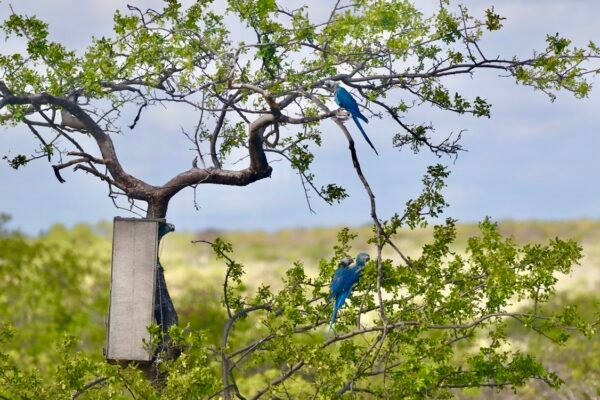
Historically, Spix’s Macaws were associated with the Caatinga biome of Brazil, particularly areas containing seasonal waterways and vegetation suitable for feeding and nesting. Their natural environment provided seeds, fruits, and other plant material, while cavities in mature trees offered important nesting locations.
The species experienced a dramatic population decline as a result of habitat destruction, changes to its natural environment, and historical trapping for the illegal wildlife trade. These pressures eventually contributed to the disappearance of the Spix’s Macaw from the wild for many years.
Today, conservation programs focus on captive breeding, habitat restoration, research, and carefully managed reintroduction. These efforts aim to establish sustainable wild populations and restore the species to suitable areas within its historical range.
The native habitat of the Spix’s Macaw was primarily associated with northeastern Brazil, particularly the Caatinga region. Unlike the lush tropical rainforest often associated with macaws, the Caatinga is characterized by a much drier climate and vegetation adapted to seasonal rainfall.
Spix’s Macaws were closely connected with areas near rivers and seasonal waterways. These locations provided access to food, water, and suitable trees for nesting. The availability of mature trees and native vegetation was therefore an important part of their natural habitat.
Understanding the species’ native environment is essential to conservation because successful reintroduction requires more than simply releasing birds. Suitable habitat must also provide food resources, nesting opportunities, water, and protection from human disturbance.
The Spix’s Macaw is native to Brazil, with its historical range centered in the northeastern part of the country. Its best-known natural habitat was the region surrounding the São Francisco River and associated waterways.
The species’ restricted geographical range made it particularly vulnerable to habitat changes and human activity. The loss and degradation of suitable vegetation reduced the resources available to the remaining birds and contributed to the species’ decline.
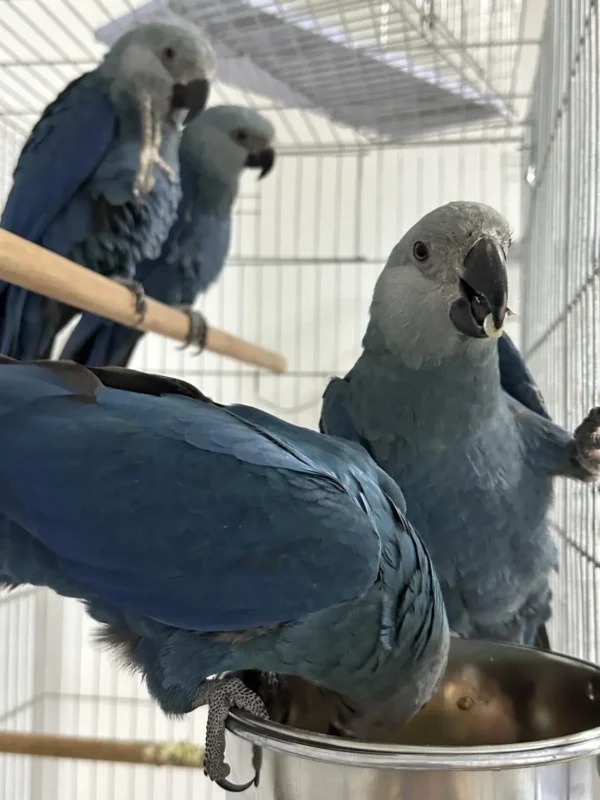
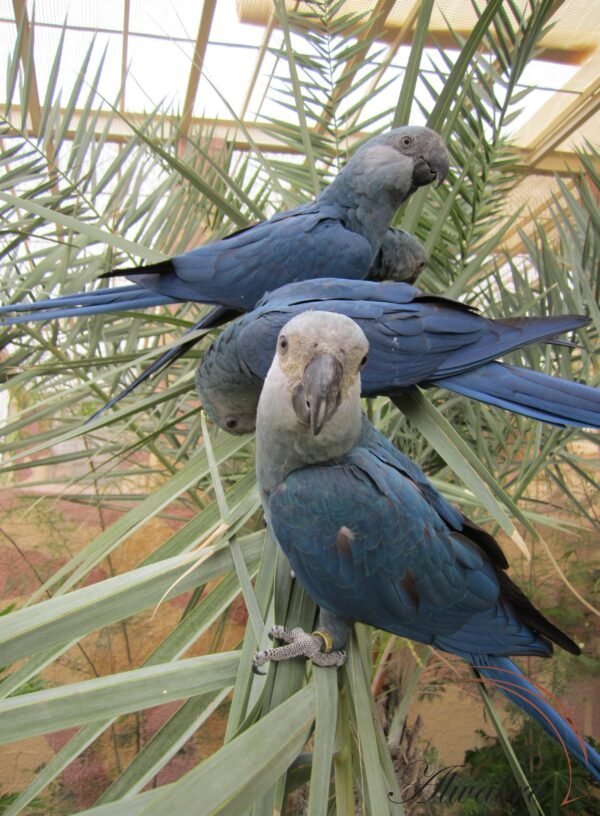
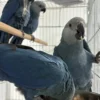
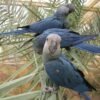
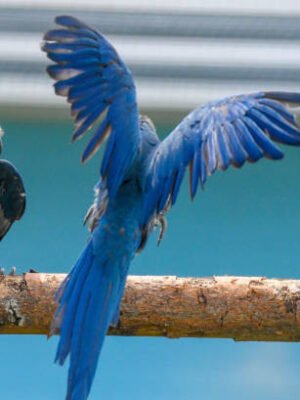
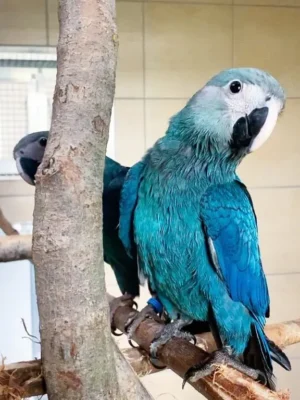
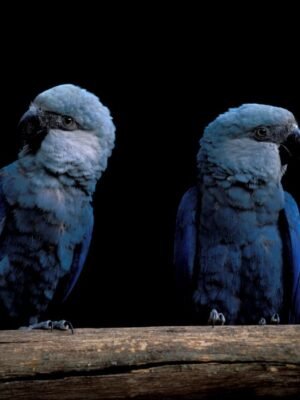
The Spix’s Macaw is recognized by its predominantly blue plumage, which makes it one of the most visually distinctive small macaws. Its feathers range from deeper blue on the wings and body to lighter shades around parts of the head.
The face has relatively bare skin around the eyes and bill, while the dark bill contrasts with the bird’s blue feathers. Compared with larger macaws, the Spix’s Macaw has a relatively slender appearance and a long tail.
Its distinctive appearance has unfortunately contributed to its popularity in the illegal bird trade, making protection and responsible conservation particularly important.
The Spix’s Macaw is a relatively small macaw species. Adults generally measure around 55–57 cm (22–22.5 inches) in length, including the long tail.
Its size, coloration, and characteristic facial features help distinguish it from other blue macaws. Despite its relatively small body, it has the strong curved bill and long tail associated with macaws.
In its natural environment, the Spix’s Macaw feeds on plant-based foods available within its habitat. Its diet can include seeds, fruits, nuts, and other plant material, depending on seasonal availability.
The species’ relationship with native vegetation demonstrates why habitat conservation is so important. Protecting individual birds without restoring their natural food sources would not be enough to create a stable wild population.
For conservation programs, nutrition must also be carefully managed so that captive birds receive an appropriate diet while retaining behaviors that can help them adapt to natural conditions.
Spix’s Macaws are intelligent, social parrots with behaviors typical of many macaw species. Communication through vocalizations plays an important role in interactions between individuals.
Like other parrots, they have strong beaks adapted for manipulating food and objects. Their intelligence and social nature also make them highly responsive to environmental conditions.
For conservationists, understanding natural behavior is especially important when preparing captive-bred birds for release. Birds need opportunities to develop appropriate feeding, social, and survival behaviors before being returned to the wild.
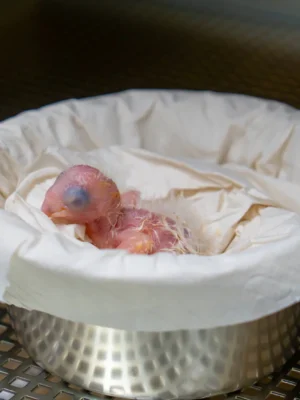
The conservation of the Spix’s Macaw is one of the most significant parrot conservation efforts in the world. Captive-breeding programs have played a major role in maintaining the species and increasing the number of birds available for potential reintroduction.
Conservation work involves several complementary strategies, including breeding management, genetic management, habitat restoration, scientific research, monitoring, and protection from illegal capture.
The ultimate goal is not simply to maintain Spix’s Macaws in captivity but to establish a self-sustaining population in suitable native habitat.
The Spix’s Macaw suffered from a combination of pressures, including habitat loss, habitat degradation, and illegal trapping for the wildlife trade.
Because the species had a naturally restricted distribution, changes within its native range could have a particularly severe impact. The removal of individual birds from an already small population further reduced opportunities for natural reproduction.
Conservation programs therefore address both the birds themselves and the environmental conditions necessary for their long-term survival.
Reintroducing Spix’s Macaws into their historical range is a complex conservation process. Captive-bred birds must be carefully selected, prepared, monitored, and released into suitable habitat.
The restored environment must provide sufficient food, nesting resources, water, and protection. Conservationists also need to monitor released birds to understand their survival, movements, reproduction, and adaptation to the wild.
Reintroduction represents an important step toward restoring the Spix’s Macaw to the ecosystems where it historically occurred.
Protecting the Spix’s Macaw requires supporting legitimate conservation programs and protecting its native habitat. Responsible wildlife ownership also matters because demand for rare parrots can encourage illegal collection and trafficking.
People can contribute by learning about endangered parrots, supporting reputable conservation organizations, avoiding illegally sourced wildlife, and promoting the preservation of Brazil’s native ecosystems.
The Spix’s Macaw is native to northeastern Brazil. Its historical range was associated with the Caatinga region and areas around rivers and seasonal waterways.
The scientific name of the Spix’s Macaw is Cyanopsitta spixii.
The species naturally feeds on plant-based foods such as seeds, fruits, and other available vegetation. Its exact food resources vary according to its habitat and seasonal availability.
Its historical decline was linked to habitat destruction, habitat degradation, and trapping for the wildlife trade. Its naturally restricted range also made it particularly vulnerable to environmental changes.
Yes. Captive breeding, habitat restoration, research, monitoring, and reintroduction efforts are being used to help recover the species and restore populations within its historical range.
The Spix’s Macaw is more than a remarkably beautiful blue parrot. It is an important symbol of the challenges faced by endangered parrots and the possibilities of carefully coordinated conservation. Understanding its native habitat, diet, behavior, and history helps explain why protecting both the species and its ecosystem is essential.
The future of the Spix’s Macaw depends on continued conservation, habitat protection, responsible wildlife practices, and successful establishment of sustainable populations in its native Brazil.
Reviews
There are no reviews yet.